About EPI
Insufficient PERT dosing can cause some patients with EPI to fall through the cracks
Looking for information about EPI in patients with CF?CF=cystic fibrosis; EPI=exocrine pancreatic insufficiency; PERT=pancreatic enzyme replacement therapy.
480,000 to 960,000 lipase units may seem high, but that's what a healthy pancreas produces each meal1*
In fact, steatorrhea occurs when lipase output is <10% of normal.
- *The estimated “normal” amount of pancreatic enzyme secretion 4 hours after a meal varies with content and volume of meal ingested. Data estimated from a study using test meals of 300 to 600 kcal.

See what it looks like when a pancreas is functioning properly, and when it's not, for patients with EPI who need PERT.
Watch the video
Meet Grace, 42
- Grace was diagnosed with chronic pancreatitis 8 years ago
- She takes multivitamins, antianxiety medications, and a methyl folate daily
- Started experiencing gastrointestinal symptoms 3 years ago
- Made changes to her diet but symptoms persisted
- Diagnosed by her primary care physician with irritable bowel syndrome with diarrhea (IBS-D) and prescribed an anti-diarrheal
Not an actual patient.
Not an actual patient.
1 in 4 patients with EPI was originally
diagnosed with another GI
condition2†
- † In a survey of 500 clinicians and 1,001 adult patients with chronic GI issues.
GI symptoms could indicate EPI,
another disorder, or
both3-13
| Small Intestinal Bacterial Overgrowth |
IBS-D | Inflammatory Bowel Disease |
Celiac Disease |
Chronic Pancreatitis |
Type 1 & 2 Diabetes |
Pancreatic Cancer |
Cystic Fibrosis |
EPI | |
|---|---|---|---|---|---|---|---|---|---|
 Weight loss
|
 |
|
|
|
|
|
|

|
|
 Abdominal pain
|
|
|
|
|
|
|
|
|
|
 Bloating
|
|
|
|
|
|||||
 Flatulence
|
|
|
|
|
|||||
 Diarrhea
|
|
|
|
|
|
|
|
||
 Steatorrhea
|
|
|
|
|
|
| Small Intestinal Bacterial Overgrowth | IBS-D | Inflammatory Bowel Disease | Celiac Disease | Chronic Pancreatitis | Type 1 & 2 Diabetes | Pancreatic Cancer | Cystic Fibrosis | EPI | |
|---|---|---|---|---|---|---|---|---|---|
|
Weight loss
|
|
|
|
|
|
|
|
|
|
|
Abdominal pain
|
|
|
|
|
|
|
|
|
|
|
Bloating
|
|
|
|
|
|||||
|
Flatulence
|
|
|
|
|
|||||
|
Diarrhea
|
|
|
|
|
|
|
|||
|
Steatorrhea
|
|
|
|
|
|
If a patient presents with any of these
symptoms, especially if they get worse after a
fatty
meal, it could
be EPI14
- This chart is for informational purposes only. It is not a complete list of symptoms for each disorder and is not intended to be used to diagnose, treat, or care for any particular patient.
- GI=gastrointestinal.

6 months later:
- Grace’s symptoms remained, and she was referred to a gastroenterologist
- She was diagnosed with EPI due to chronic pancreatitis
Not an actual patient.
Not an actual patient.
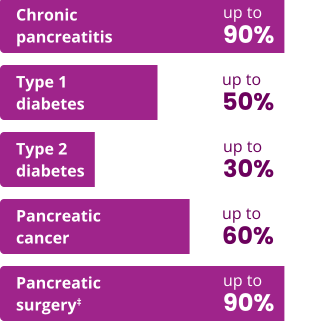
Patients with the following underlying conditions
may also have
EPI15,16
- IBS-D17
- Crohn's disease18
- Ulcerative colitis18
- Celiac disease (with current or persistent diarrhea)19,20
- IBS-D17
- Crohn's disease18
- Ulcerative colitis18
- Celiac disease (with current or persistent diarrhea)19,20
- ‡Surgery for pancreatic neoplasms. The Whipple procedure is associated with the highest rate of EPI (up to 98%), while pylorus-preserving intervention has a slightly lower rate (80%-90%).

Grace’s doctor advised her to change her diet and stop smoking
- With an iron FE-1 level in the 85 range, Grace's doctor advised her to change her diet and stop smoking
Not an actual patient.
Not an actual patient.
Effective management of EPI depends on21:
Adequate dosing
of a PERT
Lifestyle and dietary
modifications
Maintaining
adequate nutritional
status
with vitamin/
nutrient supplements
The ACG identifies improved nutrient absorption and GI symptom relief as important treatment goals in patients with EPI and CP.22
ACG=American College of Gastroenterology; CP=chronic pancreatitis.

1 year later:
- Grace’s symptoms persisted, prompting her to return to her doctor
- She was prescribed a PERT dose of 15,000 lipase units per meal, despite her 161-lb body weight
- Without proper education on how to take PERT with each snack and meal, as well as support, Grace struggled to adequately manage her symptoms
Not an actual patient.
Not an actual patient.
Expert-recommended starting doses may not be
enough to manage EPI symptoms for some patients
Insufficient PERT dosing is the most
common
reason for
treatment failure23
Insufficient PERT
dosing is
the most common
reason for treatment failure23
72% felt they were not adequately dosed24
n=80
of the 71 respondents who reported their doses were taking a dosage of 40K lipase units or less per meal24
42% of patients reported having not yet arrived at the optimal dose24
n=44
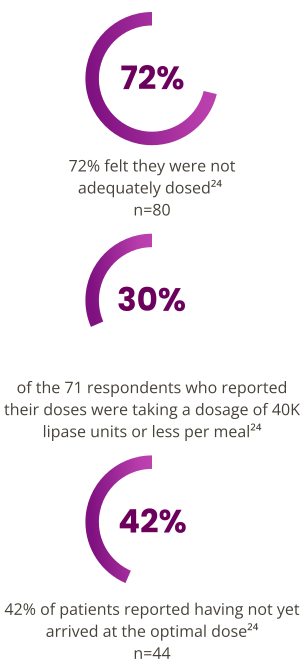
- Responses from a 2023 real-world survey of 111 patients with EPI.

Grace went back to her doctor to discuss treatment options.
Not an actual patient.
Not an actual patient.
PERT underdosing can
limit
treatment success
—an effective starting
dose could require more
lipase than
you
realize23,25
In a 2004 study in Spain, only a little over half of EPI patients (n=24) were able to normalize fat digestion.26
In a separate survey of EPI patients (N=91), two-thirds (68%) reported steatorrhea-related issues, and ~40% suffered from weight loss despite 75% of patients taking a median dose of 150K lipase units per day.27
Patients cite many
reasons why they
discontinue
PERT
treatment, including pill
burden.28
On average, patients with EPI are managing ~6 prescriptions per month.29
Expert-recommended starting doses may not be enough to manage symptoms for some patients.14,22

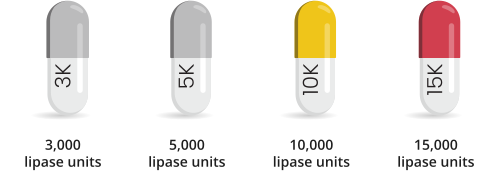
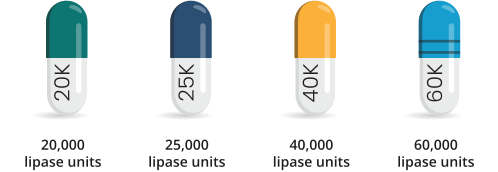
Grace and her doctor decided to try a single capsule of ZENPEP 40,000 lipase units per meal because it delivers MORE lipase per capsule to help manage her EPI symptoms
Not an actual patient.
Not an actual patient.
- Disclaimer: The patient profiles and stories shown on this website are hypothetical examples developed to illustrate potential clinical presentations and management considerations in EPI. They are not real patients and do not reflect actual individual treatment experiences or outcomes with ZENPEP. Individual patient responses to therapy may vary. Healthcare professionals should rely on their independent clinical judgment and the full Prescribing Information when making treatment decisions.