Resources
Fill the information gaps by delivering more of the resources your patients need
Video Library
Get an in-depth look at several aspects of ZENPEP
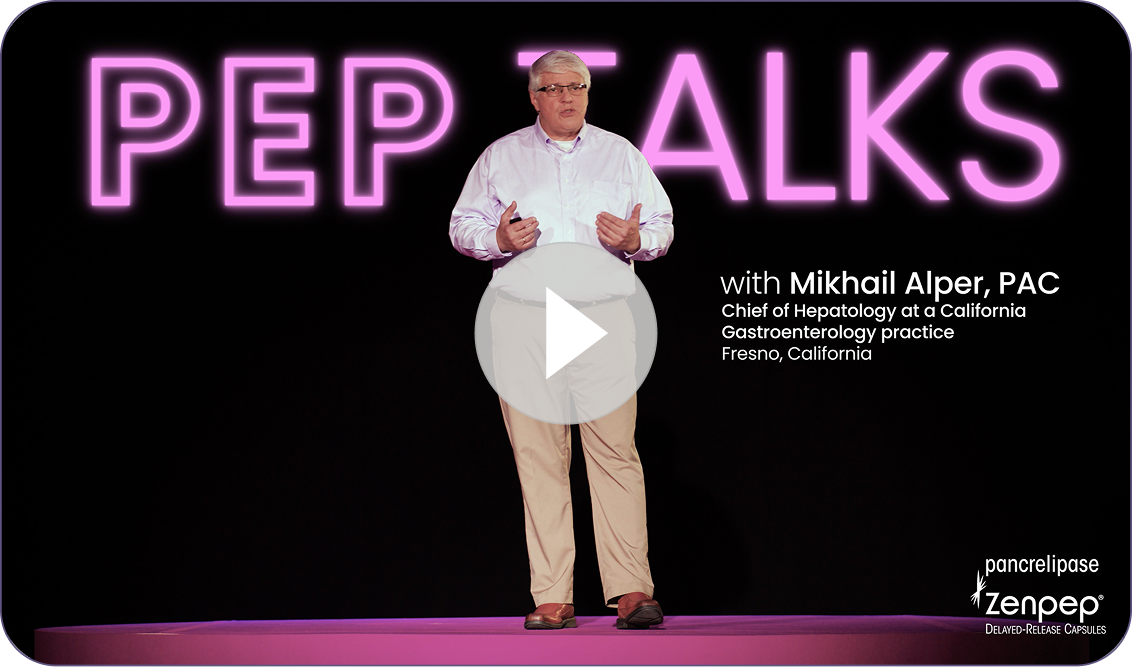
PEP Talks with Mikhail Alper, PAC
Listen to Mikhail Alper discuss his approach to treating EPI and experience with ZENPEP
The science behind ZENPEP
Get an in-depth look at how EPI, pancreatic function, and ZENPEP are connected


Meet Dee
Hear Dee’s personal struggle with more than 30 years of undiagnosed EPI symptoms
ZENPEP Patient
Brochure
A brochure for patients and caregivers who want
to learn more about EPI symptoms, diagnosis,
and management goals
Z-Save® Mail-in
Rebate
A rebate form for ZENPEP patients who purchased
their medication at the pharmacy and were not
able to use their copay card
Speaker Events
Frequently Asked Questions
ZENPEP (pancrelipase) is a combination of porcine-derived lipases, proteases, and amylases indicated for the treatment of exocrine pancreatic insufficiency.1
Yes. In the pivotal trial, patients with EPI due to CF achieved a mean coefficient of fat absorption (CFA) of 88.3% with ZENPEP vs 62.8% with placebo. The mean difference in CFA was 26 percentage points in favor of ZENPEP treatment (95% CI: 19%-32%); P≤0.001 (primary endpoint).1,2
EPI may cause the following symptoms: abdominal pain, bloating, excessive flatulence, frequent stools, nausea, malaise, diarrhea, and steatorrhea.3-5
In addition to the treatment of causative factors, there are 2 key goals for managing EPI: improving digestion and absorption of nutrients, and relieving GI symptoms of EPI. Management includes lifestyle and dietary modifications, vitamin and nutrient supplementation, and pancreatic enzyme replacement therapy.6-9
No. ZENPEP demonstrated results without the use of PPIs, H2-blockers, or motility agents in clinical studies.2
Dosage
- ZENPEP is orally administered. Start ZENPEP at the
lowest recommended dosage and individualize the
dosage based on clinical symptoms, the degree of
steatorrhea present, and the fat content of the
diet.1
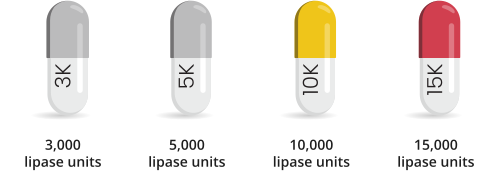
Infants (up to 12 months) - Infants may be given 3,000 lipase units (1 capsule) per 120 mL of formula or per breastfeeding1
- Do not mix ZENPEP capsule contents directly into
formula or breast milk prior to
administration1
Children Older Than 12 Months and Younger Than 4 Years - Enzyme dosing should begin with 1,000 lipase
units/kg of body weight per meal to a maximum of
2,500 lipase units/kg of body weight per meal (or
≤10,000 lipase units/kg of body weight per day), or
less than 4,000 lipase units/g fat ingested per
day1
Children 4 Years and Older and Adults - Enzyme dosing should begin with 500 lipase units/kg of body weight per meal to a maximum of 2,500 lipase units/kg of body weight per meal (or ≤10,000 lipase units/kg of body weight per day), or less than 4,000 lipase units/g of fat ingested per day1
- Usually half of the prescribed ZENPEP dose for an
individualized full meal should be given with each
snack. The total daily dose should reflect
approximately 3 meals plus 2 or 3 snacks per
day1
Limitations on Dosing - Do not exceed 2,500 lipase units/kg/meal, 10,000
lipase units/kg/day, or 4,000 lipase units/g fat
ingested/day in adult and pediatric patients greater
than 12 months of age without further
investigation.1
For more information on dosing and administration, please see the full Prescribing Information for ZENPEP.
The most commonly reported AEs in Study 1 (≥6% of patients treated with ZENPEP) were headache, contusion, cough, and early satiety.1,2
No drug-related serious AEs were observed.2
Do not substitute other pancreatic enzyme products for ZENPEP. When switching from another pancreatic enzyme product to ZENPEP, monitor patients for clinical symptoms of exocrine pancreatic insufficiency and titrate the dosage as needed.1
CF=cystic fibrosis; CI=confidence interval; EPI=exocrine pancreatic insufficiency; GI=gastrointestinal; PPI=proton pump inhibitor.